
 Lime has been used in building techniques for over 5,000 years. Archaeological evidence shows it to have been in existence for this time frame due to its resilience, durability, and water resistant qualities.
The Romans used lime extensively in their building programme in Britain, and refined its application into mortars and plasters, which remained the principal surface finish for buildings until the nineteenth century, when cements took over this function. For this reason, many historic buildings in the UK contain large amounts of lime within their fabric, and an understanding of its merits and application is crucial for the care of such property – important if you are considering an ecologically-minded renovation of an old property.
Also, lime as a building material is undergoing a revival of interest and application amongst those who favour a more natural solution to building needs. Lime, gypsum and clay are particularly suited to the construction of straw bale houses or earth ships, where these natural materials seal the straw or rubber creating a strong and solid, yet breathable wall.
The Application of Lime in Building
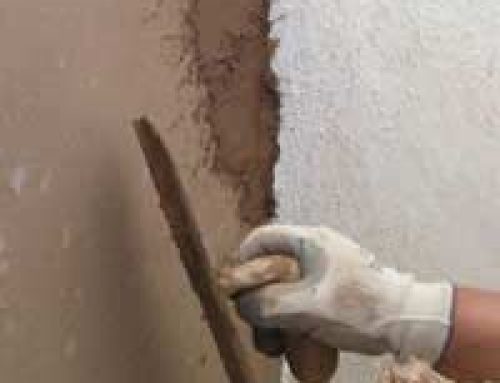
Lime is in its original state, calcium carbonate. It is anti-bacterial, resistant to ultra-violet light, and will allow moisture to release from surfaces from the inside out, rather than trapping moisture, as some other modern coatings can do. It allows the moisture in, but unlike other compounds, allows it out again. When worked into a plaster form, lime absorbs carbon dioxide from the atmosphere and then forms a strong yet permeable coat of limestone. Lime plasters are known for being very slow-drying, which allows them to gain strength over a few days, rather than setting very quickly. This can allow the lime plaster to be re-worked if necessary.
The forms that lime can be used in are as follows:
- Lime putty
- Lime mortar: this is lime putty mixed with sand. This can be used to bed in masonry, and is also used in pointing or rendering brickwork, and for general plastering use.
- Lime wash: this is lime putty diluted in water. This is used to paint internal and external walls. A pigment can be added to create a colour wash.
The National Lime Association recommends adding a small amount of cement with lime and sand in a 1:2:9 mix to make a really tough mortar or plaster mix. However, there are several brands offering cement-free ready mixes available on the market, including quicklime which needs Prickly Pear Cactus Gel (Nopal) added as a binding agent, and many builders will naturally work to their own mixes, or work with a client or architect on creating the right blend for each specific job.
An Old Material for a Modern Age
As with many of the construction materials described on this website, lime is an ancient resource that has been rediscovered for modern ecological building. It is a relatively renewable resource, from calcium deposits, available in many areas worldwide, and is more workable than cement.
Its increased popularity as a building material has shown an increase in its availability recently. It can however be caustic in its wet state, so great care needs to be taken with it. Lime also needs to be able to adhere to a permeable surface, so surfaces must be primed in advance. However, it has a much warmer look and feel to it than cement, and this gives it the advantage.





Im just thinking on a project to consruct a builiding that can photosynthesise and generate its energy from gravity ( wake up global warming !!!!!)
Hi, I work at a hardware store and have recently had an inquiry for Brown Lime to mix in with the concrete. This customer builds non profit churches around South Africa. I would like to know more about this and maybe keep some in my store and educate my customers about the benefits.
Can I use lime over cement blocks? If so, will that be enough protection for humidity?
I have an old house constructed of unbaked clay bricks which now shows rising damp in the interior walls which have been cement plastered, I need advise on the lime plaster mix to use to re-plaster the house.
@N/A – search for lime plasterers in your area and ask for their advice.
The National Lime Association recommends adding a small amount of cement with lime. A UK sustainable build site should be careful quoting guidance from our friends across the pond where construction materials, techniques and history will differ from our own. Try speaking to Building Limes Forum or SPAB (Society for the Protection of Ancient Buildings) in the UK. Most lime experts and specialists in the UK will rarely advocate the use of cement in lime mixes. You also suggest that lime plaster is slow drying (true), and could be reworked after a few days. Whilst lime remains workable for significantly longer than cement and gypsum mixes, a few days is unrealistic in most situations. Great to see articles supporting lime and sustainable building but I feel a little more advice and support from the experts should have been sought.
really loving this website whoever has worked on it has done a great bluming job! well done!